
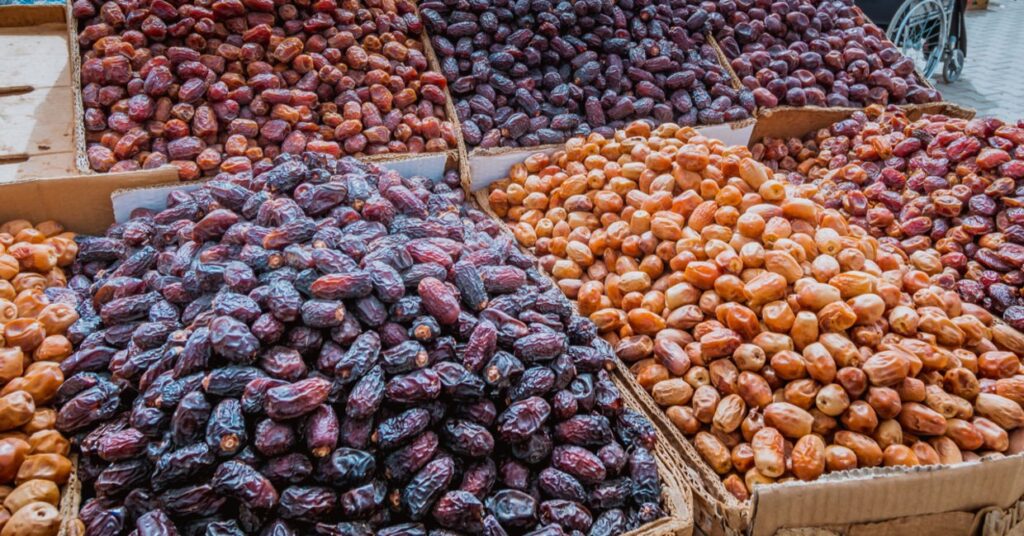
Iranian dates occupy a special place in the global date trade. From the soft, dark Mazafati of Bam to the firm, amber Piarom and the everyday Sayer, Iran supplies a spectrum of varieties that buyers across Asia rely on year after year. For anyone planning to move dates in volume — whether you are a wholesaler stocking a warehouse, a retailer building a private label, or a trader supplying the Ramadan season — understanding how importing and wholesaling actually works is the difference between a healthy margin and a costly mistake. This guide walks through origin, grading, sourcing, logistics, and the practical checks that protect a bulk buyer.
Why Iranian Dates Command Global Demand
Iran is one of the largest date-producing countries in the world, and its long cultivation history shows in the diversity of what it grows. The climate of provinces such as Kerman, Khuzestan, and Sistan-Baluchestan produces fruit with distinct textures and sugar profiles. Soft varieties like Mazafati are prized for their moist, caramel-like flesh; semi-dry types such as Piarom and Rabbi hold their shape well and travel long distances without spoiling; and dry varieties like Zahedi are favoured for processing and paste.
This range is exactly why international buyers keep coming back. A single origin can cover several market segments at once — premium gift boxes, mid-tier retail packs, and industrial-grade fruit for syrups and bakery use. When you understand the origin of what you are buying, you can match the right variety to the right customer instead of guessing. If you are new to the category, it helps to first study the differences between local and international date suppliers, because the sourcing model changes completely once fruit crosses a border.
Origin also carries a reputational weight that a wholesaler can put to work. Buyers in many markets have learned to associate specific Iranian regions with specific qualities, and that recognition helps a product sell. A retailer who can tell customers exactly where the fruit was grown, and why that region matters for the variety, is offering a story as much as a product — and stories move stock. The more a buyer knows about the growing conditions, harvest window, and traditional handling of each variety, the more confidently that buyer can position the fruit at the right price point for the right shelf.
Understanding Grades Before You Commit
Grading is where inexperienced buyers lose the most money. Two cartons labelled simply "Mazafati" can differ enormously in moisture content, fruit size, colour uniformity, and the proportion of blemished or immature pieces. Reputable exporters grade by measurable criteria rather than vague descriptions, and a serious wholesaler learns to ask for those specifics.
Key attributes to confirm before any bulk order include:
- Size and count — the number of dates per kilogram, which affects how a pack looks on a shelf and how it is priced.
- Moisture level — soft dates with high moisture are delicious but have a shorter shelf life and need careful cold-chain handling.
- Colour and uniformity — consistent colour signals careful sorting; a mix of light and dark pieces often means grades were blended.
- Defect ratio — the allowed percentage of split skins, sugar crystallisation, or immature fruit in a lot.
- Cleanliness and packing — whether the fruit is washed, pitted or unpitted, and how it is boxed for transport.
A wholesaler who buys against a clear grade specification can hold a supplier accountable when a shipment arrives. A wholesaler who buys on a photo and a promise usually cannot. For retail-focused buyers, our overview of the benefits of buying dates wholesale for retailers explains how grade discipline flows straight through to your shelf margins.
It is worth requesting samples that are genuinely drawn from the production lot you intend to buy, not a hand-picked showpiece. A good exporter is comfortable providing representative samples and will not object to a buyer verifying moisture and count on arrival. The habit of writing the grade into the purchase agreement — with agreed tolerances and a clear remedy if the shipment falls short — is one of the simplest ways a wholesaler protects working capital. Grades are not bureaucracy; they are the shared language that lets a buyer and a seller on different continents agree on exactly what is being traded.
Finding a Reliable Source
The sourcing stage decides everything downstream. A dependable exporter offers more than a low price — they offer consistency across seasons, honest grading, proper documentation, and the ability to hold quality through storage and shipping. Price alone is a weak signal; the cheapest offer is frequently the one that arrives with the highest defect ratio or the wrong moisture level.
When you evaluate a potential partner, look for a company that can describe its supply chain clearly, provide samples that match production lots, and supply the paperwork your customs authority will require. Long-standing exporters usually have references, repeat clients, and a track record you can verify. A useful starting framework is our guide to finding fresh date suppliers and dried-fruit wholesalers, which lays out the questions worth asking before you place a first order.
It also pays to remember that regional demand shapes what your source needs to deliver. In fast-growing markets across Southeast Asia, seasonal spikes around Ramadan can strain even a well-run supply chain. Buyers who plan for those peaks — booking volume early and confirming grades in writing — avoid the last-minute scramble that pushes prices up and quality down.
Serving the Indonesian Market
Indonesia is one of the most significant date-consuming markets in the region, with demand rising sharply in the weeks before Ramadan and staying strong through the fasting month. For distributors handling shipments and delivery into the archipelago, the practical questions are the same ones every serious buyer faces: which variety, which grade, and how to keep the cold chain intact from port to warehouse. Working with an experienced importir kurma that already understands local distribution and customs handling can shorten the path from origin to shelf considerably, especially for buyers new to serving Indonesia at scale.
Because tastes vary by region, a distributor supplying Indonesian retailers usually stocks a spread of varieties rather than betting on one. Soft Mazafati sells well as a premium gift item, while firmer, more affordable grades move in volume through traditional markets and modern trade alike. Matching the assortment to local buying habits is as important as sourcing the fruit itself.
Packaging and presentation also carry weight in this market. Retail-ready packs with clear labelling, a visible variety name, and any required certification tend to earn placement in modern trade, while bulk formats still dominate traditional channels. A distributor who can supply both formats from the same reliable source gains flexibility — serving supermarkets and street markets from a single, well-graded inventory. That flexibility, more than any single clever tactic, is what lets a regional supplier ride the seasonal wave rather than being knocked over by it.
Logistics, Storage, and the Cold Chain
Dates are forgiving compared with many fresh fruits, but they are not indestructible. Soft, high-moisture varieties in particular can ferment, crystallise, or lose their prized texture if they are stored warm for too long. Managing the cold chain — refrigerated or controlled-temperature storage from the exporter's warehouse through shipping and into your own facility — protects both quality and shelf life.
Practical logistics checks for a bulk importer include confirming the packing format (bulk cartons versus retail-ready packs), the palletisation and container loading plan, and the expected transit time against the fruit's shelf life. Documentation matters just as much: certificates of origin, phytosanitary certificates, and any halal certification your market requires should be agreed before shipment, not chased afterward. A reliable exporter treats this paperwork as routine, which is one more reason to prioritise experience when you choose a dates-fruit exporter to work with.
Handling on arrival deserves the same care as handling in transit. A shipment that survived a well-run cold chain can still be damaged by a warm loading bay or by cartons left on a sunlit floor for a day. Wholesalers who plan their receiving process — dedicated cool storage, prompt unloading, and a quick inspection against the agreed grade — preserve the value they paid to protect. It is also wise to rotate stock on a first-in, first-out basis, especially for soft varieties, so that no lot sits long enough to lose its texture or develop surface sugaring. Small operational disciplines like these compound into a noticeably lower spoilage rate over a full season.
Pricing, Volume, and Negotiation
Bulk pricing follows a familiar logic: larger, committed volumes earn better per-kilogram rates, and buyers who build long-term relationships tend to secure more stable pricing across seasons. That said, the headline price is only one line in the total cost of landing a shipment. Freight, insurance, duties, cold-storage handling, and the cost of any rejected or defective fruit all shape your real margin.
Smart wholesalers negotiate on the whole package, not just the number per kilogram. They confirm grade tolerances, agree on how disputes over quality will be resolved, and clarify payment terms before committing. They also plan their volumes around demand cycles so they are neither caught short during Ramadan nor sitting on soft dates that are aging in the warehouse. Understanding how origin, grade, and importing come together — as with the way traders handle importing premium dates into Malaysia — gives a buyer the context to negotiate from a position of knowledge rather than hope.
Currency and timing add another layer. Because Iranian dates are traded internationally, exchange-rate movements between the point of order and the point of payment can quietly reshape a margin, so buyers often lock terms early or split large orders to spread that exposure. Season matters too: buying at the tail end of a harvest can mean better prices but a narrower choice of grades, while buying early secures the pick of the crop at a firmer rate. There is no single right answer — the correct strategy depends on whether a buyer competes on price, on quality, or on reliability of supply. What every experienced buyer shares is the habit of costing the full landed price, comparing it against realistic selling prices, and walking away from a deal whose numbers do not work rather than chasing volume for its own sake.
Building a Sustainable Wholesale Operation
The buyers who succeed in the date trade over the long run treat it as a relationship business, not a series of one-off transactions. They find a source they trust, learn its varieties and grades in detail, and grow their volume as their own market grows. They keep records of what each shipment delivered so they can hold quality steady, and they diversify their assortment so a single poor harvest in one variety does not sink a season.
They also stay curious about the wider industry. Origin conditions, harvest timing, currency movements, and shifting consumer tastes all move prices and availability. A wholesaler who follows those signals — and who partners with exporters and regional distributors that share information openly — is far better positioned than one who simply reacts to whatever offer lands in the inbox. For a broader view of how the international trade fits together, the network resource at datewholesale.com offers additional perspective on sourcing dates in volume across markets.
Conclusion
Importing and wholesaling Iranian dates rewards preparation. Know the origin and what each variety is good for; buy against a clear grade specification rather than a photograph; choose a source for consistency and documentation, not just price; protect the cold chain from warehouse to shelf; and plan volumes around real demand cycles. Whether you are supplying retailers at home or serving distributors delivering into Indonesia and beyond, those fundamentals turn a risky commodity purchase into a dependable, repeatable business. Start with a trusted exporter, learn the product deeply, and build your operation one well-graded shipment at a time.